01
Scope
Selected campaigns, dates, and analysis recipe.
Campaign Analyst works from a frozen set of campaigns, dates, metrics, and comparisons. Every finding keeps its source evidence and data limitations visible.
Campaign Analyst is read-only. It can create a proposal for review, but it cannot change the Meta account.
A defined question
A frozen snapshot
A traceable finding

Choose the campaigns, reporting period, comparison period, and analysis recipe. AdFlow records those inputs before calculations begin.
Campaign selection
Immutable snapshot
Contribution, efficiency signals, allocation outliers, and supported breakdowns are calculated before any narrative interpretation is added.
Selected campaigns, dates, and analysis recipe.
Fixed campaign data and data-through time.
Contribution and supported performance signals.
Facts, interpretation, and limitations.
Questions against the same frozen snapshot.
An editable proposal with no Meta write.
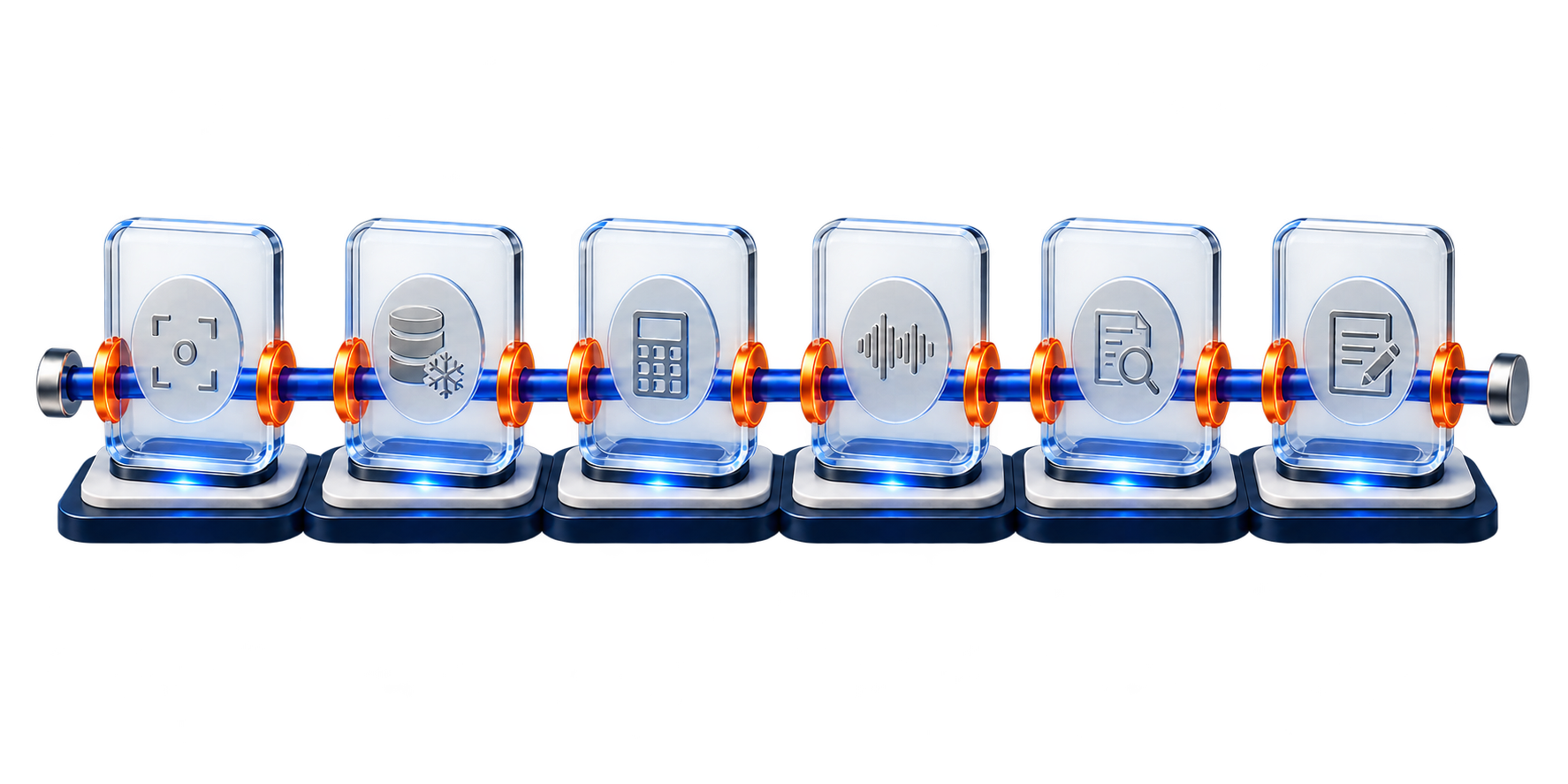
AdFlow labels each layer so an operator can inspect what was measured, what was inferred, and what is only being suggested.
A metric observed for a named campaign and period.
A bounded explanation tied to the supplied evidence.
An editable recommendation with risk and guardrail fields.
Application logic handles the deterministic analysis path. OpenAI or Gemini can add a narrative explanation when configured.
Campaign facts stay available
Provider availability does not control the underlying calculations.
Narrative interpretation
Relevant campaign context is sent to the selected provider. Meta access tokens are excluded from the prompt.