What changed?
Compare the right period, campaign scope, KPI, and breakdown without losing the account context.
AdFlow is a local decision workspace for Meta campaigns. It connects performance monitoring, evidence-based investigation, recommendation review, experiment design, and controlled account changes.
AdFlow complements Meta Ads Manager. It organizes the reasoning and review work that usually gets split across dashboards, notes, and spreadsheets.
One campaign scope
Evidence-linked findings
Human-controlled changes

Meta can show that performance moved. The harder work is preserving the context behind the next decision.
Compare the right period, campaign scope, KPI, and breakdown without losing the account context.
Keep every finding tied to named campaigns, source metrics, data quality, and a frozen snapshot.
Separate an idea, a learning plan, and an account change so each receives the right review.
The same scope moves forward while each workspace adds a specific kind of context or authority.
See delivery, spend, results, targets, and recent account changes in context.
Select the campaigns and dates that matter, then freeze that scope for analysis.
Review evidence-linked findings and turn the useful ones into editable recommendations.
Give the recommendation a hypothesis, fixed cells, one variable, and a stopping rule.
When Meta setup must change, inspect the live value and approve the exact proposed value.
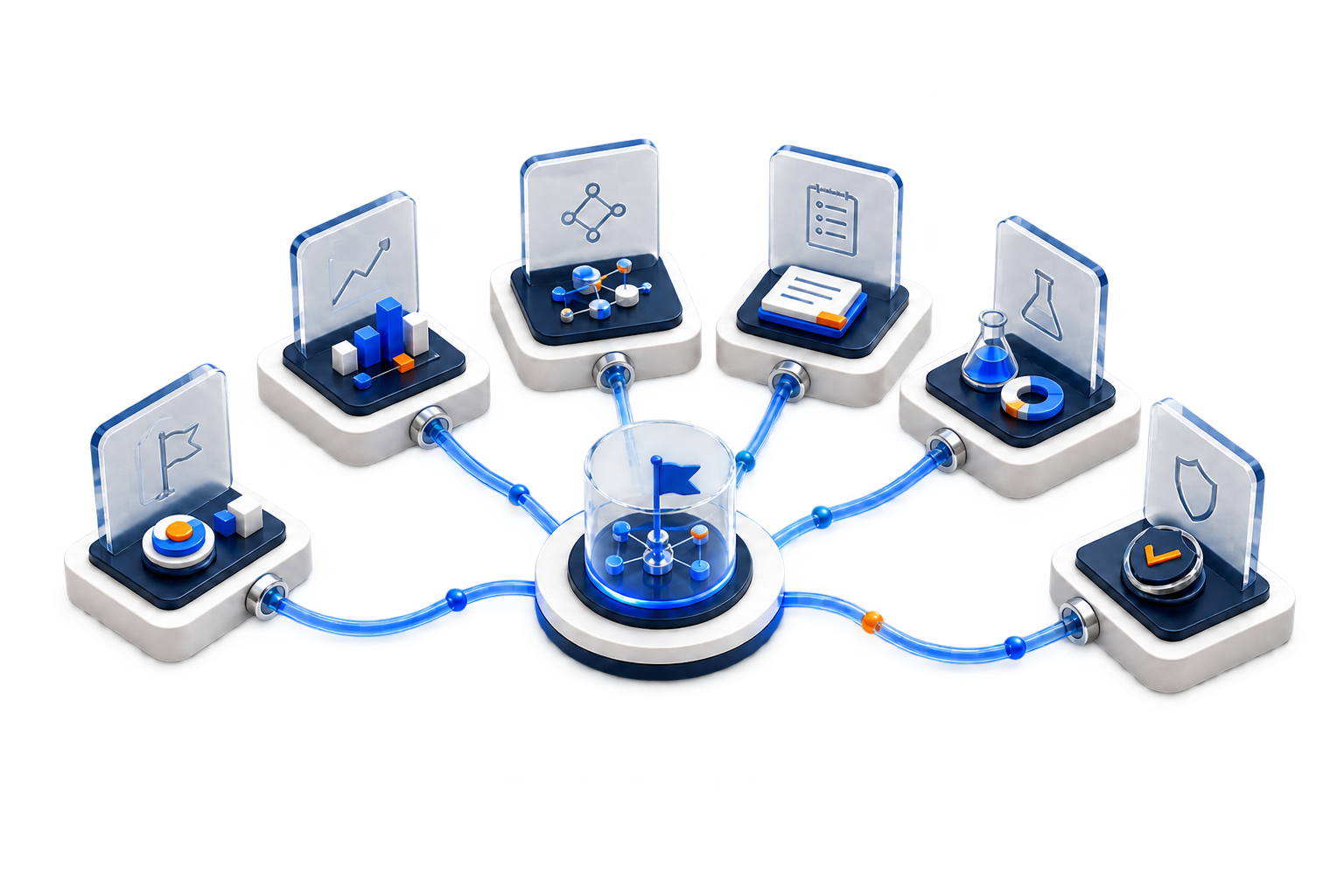
AdFlow is designed around the handoffs between seeing a signal and changing an account.
Meta Ads Manager remains the source for delivery and account controls. AdFlow keeps the reasoning around those controls explicit.
AdFlow keeps two decisions separate: what you want to learn and what the Meta account is allowed to change.
Experiment review covers the hypothesis, control and variant, isolation variable, metric, sample, runtime, and stop rule.
Execution review covers the live Meta value, proposed value, guardrails, approval, confirmation, outcome, and possible rollback.
The public demo shows the product flow without connecting a live account.
Sample campaigns. View-only entry. Live Meta execution disabled.
Editing requires a temporary password unlock, demo state may reset, and no live Meta or AI credentials are included.
Understand deployment and execution boundaries